


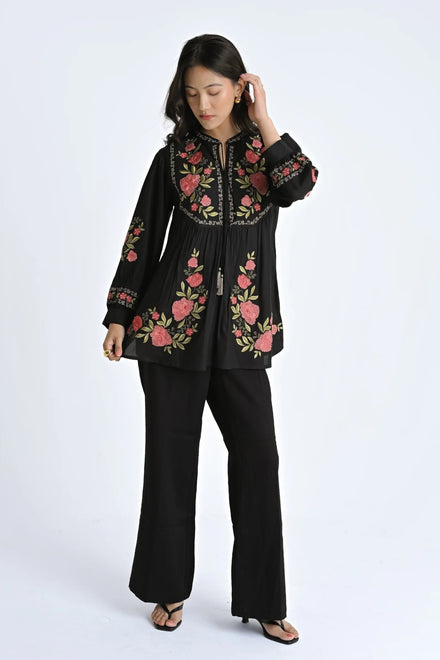
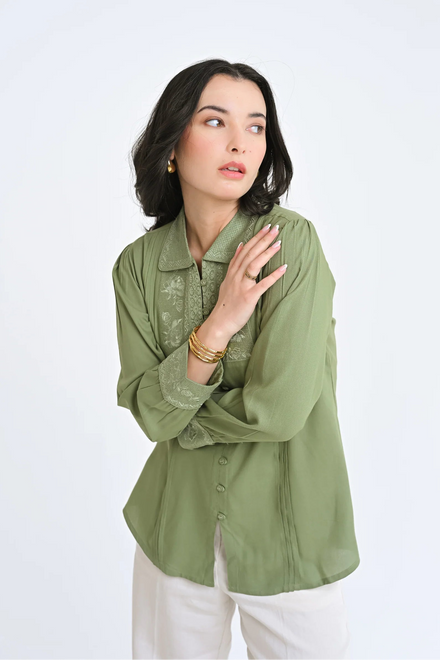


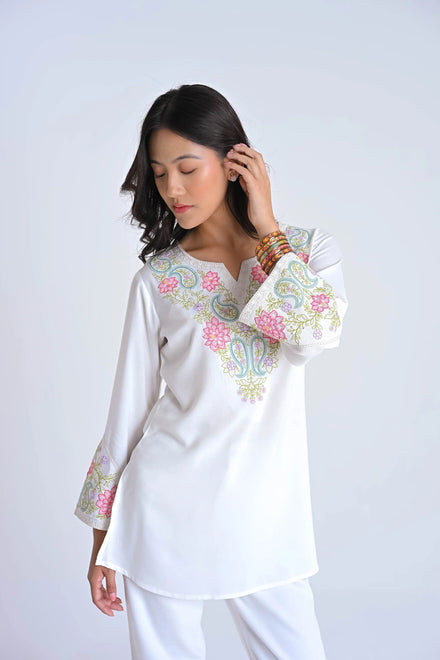



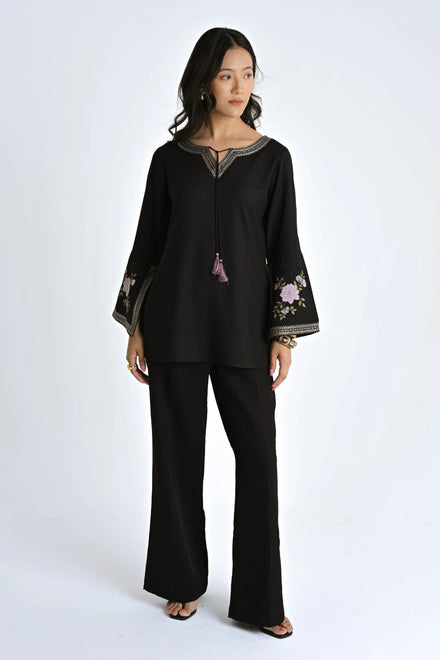
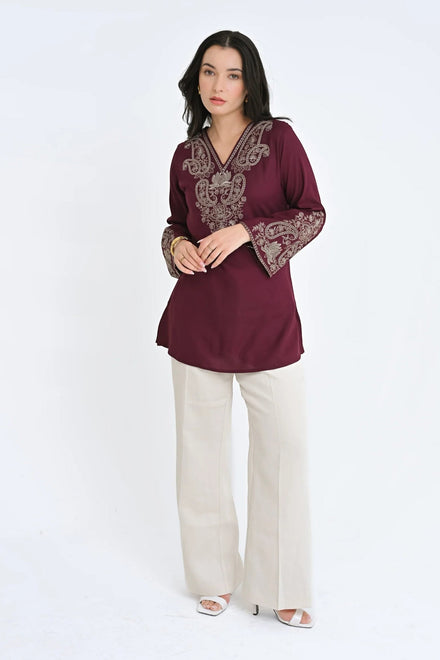
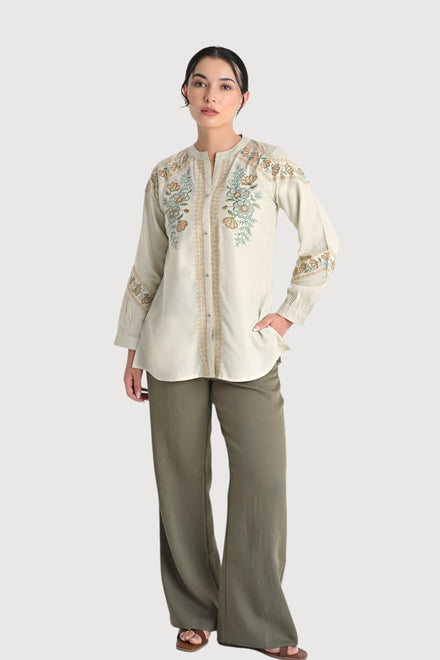
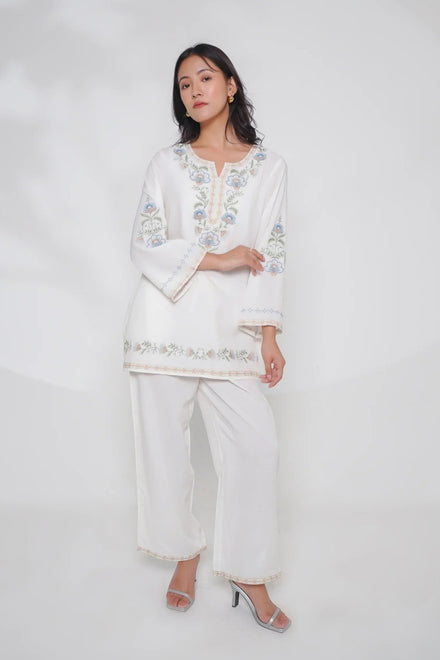
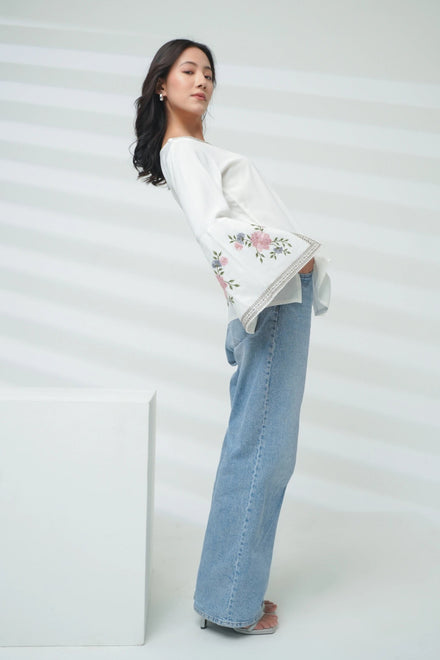
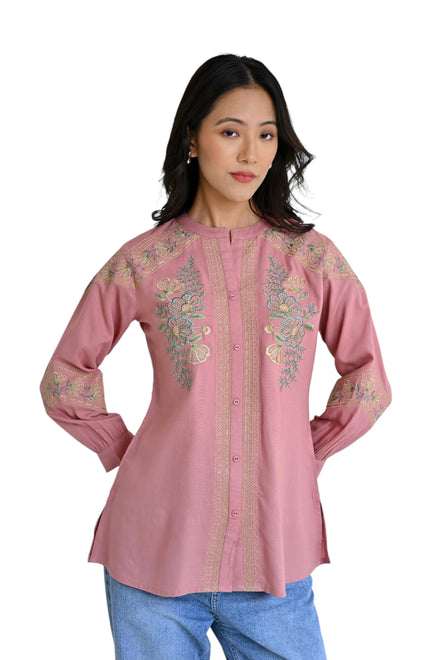

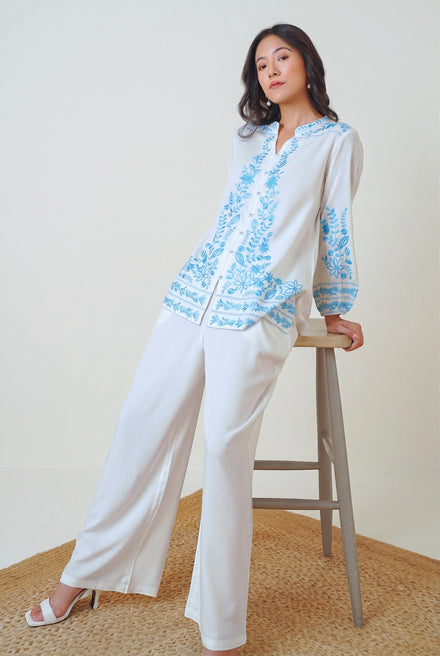
Indigrey is an embroidery house. Not a textile mill, not a fabric label — a house built entirely around the needle. Everything else we do exists to carry a single, extraordinary line of thread.
Embroidery
Mastery
Indigrey does not borrow the old vocabularies. We have written our own — a language of stitches developed in-house, technique by technique. What follows is not a catalogue. It is a collection.
A continuous chain worked back on itself until the fill takes on a low, braided relief — the house signature, and the first ground every karigar must earn.
Tatami Threadfill
Long floats of floss packed edge to edge until the motif stands proud of the cloth — the densest fill in our language, and the one that holds the most light.
Stem Threadfill
Rows of fine stem stitch packed side by side until they fill a form entirely — a Kashmiri-inspired fill that leaves a soft directional grain, so the surface catches light like brushed silk.
Each point built from a single knotted stitch, drawn tight and set one beside the next. Worked grain by grain until the motif gathers a soft, beaded relief the eye can feel before it names.
Read the technique →Linefill
Colour built entirely from parallel lines of running stitch — no solid fill, only rhythm, so the ground goes on breathing through the motif.
Seventeen techniques, each developed in our own workshop. A vocabulary that belongs to no one else.
None of it is possible without a ground worthy of the thread.
Thread & Colour
The palette an embroiderer paints with — silk floss, drawn metal, fine cotton. Each shade dyed and matched to sit true beside the next, so a gradient fill reads as one breath of colour.
The Fabric Story
Milled on the loom, turned through the jigger bath, dried on bamboo in open air. Our ground is a fine viscose rayon — chosen above all for its drape, and for how faithfully it will hold a stitch.
From Sketch to Stitch
A motif is drawn by hand, then a palette is chosen — thread colours matched to the cloth and tried out in sample swatches until they sit right. Only then does the design belong to the needle.
Hands Behind
Every Thread
Behind every motif is a karigar whose steadiness was earned over decades. Some of these techniques exist nowhere else because the hands that perfected them are ours.
The Final Inspection
Every finished piece is read against the light and against the grain. The reverse of the embroidery must be as considered as its face. The smallest fault sends it back to the frame.
The Finished Garment
Everything resolves into this — a garment that moves as though the thread were always part of it. You will not read the hours in it. You will only feel them.
You have never seen embroidery
presented like this.
That is rather the point.